
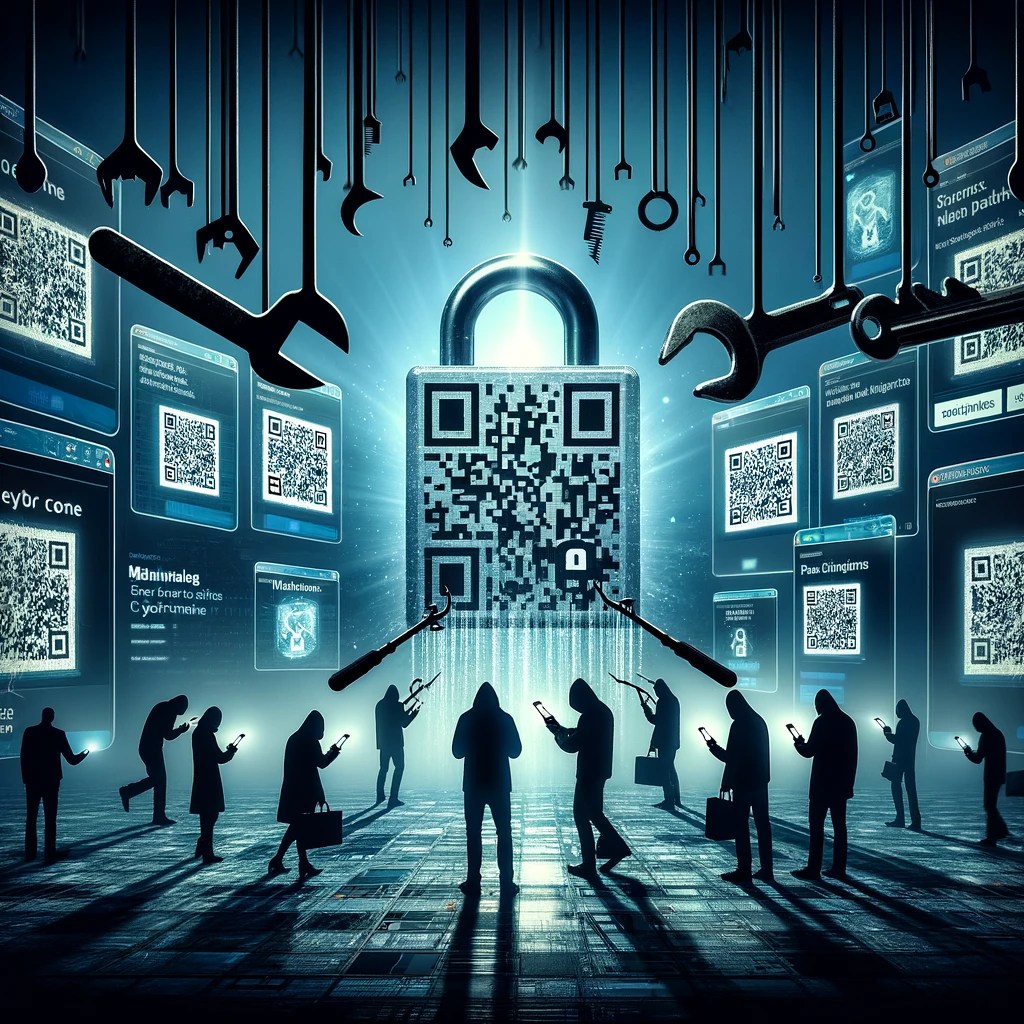
In the ever evolving digital world, the phenomenon of ‘Quishing’ – a sophisticated blend of QR codes and phishing tactics – represents a significant cybersecurity challenge. Quishing capitalizes on the widespread adoption and inherent trust in QR codes, transforming these convenient, quick-response tools into deceptive vectors for digital fraud. This malicious manipulation of QR codes signifies a worrying trend in cybercrime, exploiting the ubiquitous and innocuous nature of these digital gateways.
As QR codes have become embedded in various aspects of daily life – from retail marketing to contactless transactions – their appeal as a tool for cybercriminals has increased. Quishing attacks ingeniously leverage these codes to surreptitiously guide users to fraudulent websites or initiate unauthorized downloads of malware. Unlike traditional phishing methods that often rely on duplicitous emails or messages, quishing uses the seemingly harmless QR code as a trojan horse to penetrate the defenses of unwary users.
This insidious strategy highlights a critical gap in the collective digital awareness. The convenience and efficiency of QR codes, which have led to their widespread acceptance, also make them an ideal conduit for cyber threats. The simplicity of scanning a code, a gesture that has become almost second nature, belies the potential risks hidden within. As quishing attacks become more prevalent, understanding their mechanics, recognizing the signs, and implementing preventive measures are essential steps in safeguarding digital integrity.
Decoding Quishing: The Hidden Dangers of QR Codes
Quishing, the malicious manipulation of QR codes, presents a burgeoning threat in the digital landscape. This deceptive practice capitalizes on the widespread adoption of QR codes, exploiting them as conduits for directing unsuspecting users to fraudulent websites or triggering malicious downloads. Quishing exploits the inherent trust and convenience associated with QR codes, turning these tools, typically used for legitimate purposes like marketing and transactions, into instruments of cybercrime.
The essence of quishing lies in its stealth and subtlety. Unlike more overt forms of phishing that use emails or text messages, quishing operates under the radar, using the innocuous QR code as a deceptive mask. The process is disarmingly simple yet effective: a quishing QR code, when scanned, redirects the user to a counterfeit website. This site often imitates legitimate business portals, coaxing users to enter sensitive information such as login credentials, financial data, or personal details. Alternatively, the scan may trigger the automatic download of malware, compromising the user’s device and data.
The ubiquity of QR codes in daily life magnifies the threat of quishing. These codes have become embedded in a multitude of contexts – from advertising billboards and product packaging to digital menus and event tickets. This pervasive presence, combined with the ease of creating QR codes, provides a fertile ground for cybercriminals to plant their traps. Users, accustomed to scanning QR codes without second thought, become vulnerable targets of these hidden dangers.
Moreover, the quishing threat is exacerbated by the evolving sophistication of these scams. Cybercriminals continually refine their tactics, employing advanced techniques to make fraudulent websites more convincing and malicious downloads more stealthy. This evolution of quishing tactics necessitates a corresponding evolution in awareness and preventive measures among users.
Quishing Tactics and Real-World Scenarios
Quishing attacks are characterized by their cunning ability to masquerade as legitimate opportunities or offers, exploiting the ubiquitous and often unquestioned nature of QR codes. These deceptive tactics lure individuals into scanning QR codes that lead to harmful consequences.
A common scenario involves counterfeit promotional campaigns. Here, quishing attackers create QR codes linked to bogus offers or discounts, often replicating well-known brands to enhance credibility. When unsuspecting users scan these QR codes, they are redirected to fraudulent websites where their personal information is harvested or malware is surreptitiously installed on their devices.
Another frequent context for quishing attacks is financial deception. For instance, QR codes disguised as payment links for genuine services can lead users to fake payment portals. Unsuspecting victims, believing they are completing a routine transaction, inadvertently provide sensitive financial data to scammers.
Real-world cases have demonstrated the versatility of quishing attacks in exploiting various social and commercial situations. For example, QR codes have been placed in strategic public locations, like transit stations or busy street corners, disguised as legitimate advertisements or public service announcements. These situations reveal the depth of creativity employed by attackers in integrating quishing into everyday environments.
These instances underline the necessity for vigilance and awareness among QR code users. The creative yet deceptive nature of quishing attacks highlights the evolving landscape of cyber threats, where familiar tools are repurposed for malicious intentions. Understanding these tactics and real-world scenarios is crucial in developing strategies to identify and avoid such devious schemes.

Protective Measures Against QR Code Scams
To safeguard against quishing, a multi-layered approach to security is essential. The initial step involves a cautious assessment of a QR code’s origin. It’s critical to scan codes from trusted sources only, especially in high-stakes scenarios like financial transactions or personal data sharing.
Educating oneself about the appearance and characteristics of legitimate QR codes relevant to frequent interactions – whether in a consumer, professional, or social context – adds a vital layer of defense. In situations where the source of a QR code is unclear, it’s prudent to avoid scanning it entirely.
Enhancing digital security also involves scrutinizing the URLs that QR codes direct to. Secure and reputable websites typically use HTTPS, indicating an encrypted and safer connection. Users should be cautious of URLs that appear dubious or deviate from the expected domain name patterns of known and trusted entities.
Strong password policies form another cornerstone of safeguarding against quishing. Using robust, unique passwords for different accounts, coupled with regular updates, significantly reduces vulnerability. Implementing two-factor authentication where available adds an extra layer of security, ensuring that even if password integrity is compromised, there’s an additional barrier against unauthorized access.
Remaining updated on the latest security patches and antivirus software for mobile devices is equally important. These tools often include features that detect and alert users about potential threats from malicious websites, which can be triggered by scanning compromised QR codes.
Technological Frontiers: Innovations Countering Quishing
In the evolving battle against quishing, technological innovations are proving to be vital allies. Foremost among these advancements are the developments in QR code scanning applications. Enhanced with robust security features, these apps are engineered to detect potential threats embedded within QR codes. They work by analyzing the code before accessing the content, alerting users if suspicious or malicious links are identified.
Furthermore, advancements in AI and machine learning are being leveraged to fortify defenses against quishing. These technologies can learn from patterns associated with fraudulent QR codes, thereby enhancing the predictive capabilities of security systems. They can proactively flag codes that deviate from recognized safe parameters, offering an additional layer of protection.
Developers are also integrating augmented reality (AR) into QR code scanners, providing a safer interactive interface. AR technology allows users to visualize the content or destination of a QR code in a virtual overlay, without needing to directly access the linked website or download potentially harmful content.
Additionally, cybersecurity firms are focusing on creating more secure QR code standards and protocols. This includes the development of encrypted QR codes, which ensure that the data contained within can only be accessed or interpreted by authorized users.
In the corporate world, businesses are adopting QR code management platforms that provide enhanced security features. These platforms enable companies to generate and track their QR codes, ensuring that any data transmitted through them is secure and encrypted.
User Awareness and Education: The First Line of Defense
Raising user awareness and education is pivotal in combating the ever-growing threat of quishing. This begins with teaching users the basics: understanding what QR codes are and recognizing their ubiquitous presence in our daily lives, from commercial advertising to personal transactions. Education efforts must emphasize the potential dangers of scanning unknown or unsolicited QR codes. Users should be trained to look for signs of legitimacy in the QR codes they encounter, such as verifying the source or context in which the QR code appears. Workshops, online courses, and informational campaigns can be effective tools in spreading this knowledge.
Highlighting real-life scenarios where individuals have fallen prey to quishing can also serve as powerful educational tools. By presenting case studies, users can better grasp the deceptive tactics used by cybercriminals. It’s important to teach users to be cautious and to think critically before scanning a QR code. They should understand that a quick scan, while seemingly harmless, can lead to significant security breaches.
Legal Perspectives on Quishing
From a legal perspective, quishing poses new challenges. The anonymity and ease of generating QR codes make it difficult to trace and prosecute perpetrators. Law enforcement agencies must adapt to these challenges, employing digital forensics and cybercrime experts to track down the source of fraudulent QR codes.
The development of legal frameworks specifically addressing QR code misuse is crucial. This includes defining quishing within legal statutes and determining appropriate penalties for those who engage in QR code-related fraud. Lawmakers must work in tandem with cybersecurity experts to craft legislation that deters such criminal activities without stifling technological innovation.
The role of international cooperation is also significant, as quishing often transcends borders. Establishing global standards and collaborative efforts between law enforcement agencies worldwide can enhance the effectiveness of tracking and prosecuting quishing criminals.
The Future of Quishing: Trends and Predictions
As we navigate further into the digital age, quishing is likely to evolve alongside our digital habits and technological advancements. This evolution will see quishing tactics becoming more sophisticated, leveraging the latest in tech innovations to create more convincing and hard-to-detect scams. Future quishing attacks may integrate augmented reality elements or utilize advanced machine learning algorithms to create dynamic, context-aware QR codes that are more effective at deceiving users.
Additionally, as QR code usage becomes more embedded in various aspects of everyday life – from payments and logistics to personal identification – the opportunities for quishing attacks will expand. We might see an increase in targeted quishing attacks, where cybercriminals use data analytics to create QR codes tailored to specific demographics or individuals.
There’s also a likelihood of seeing a rise in protective technologies. Innovations like AI-driven scanners that can instantly analyze the safety of a QR code’s linked content will become more mainstream. We could also see the integration of QR code scanning functionalities within standard cybersecurity software suites, providing more comprehensive protection.
In terms of trends, there could be a move towards adopting standardized QR codes with enhanced security features or the development of universal verification systems to certify the legitimacy of a QR code before it is scanned.
This speculative look into the future of quishing underscores the importance of continuous vigilance and adaptation in our digital security practices. As technological landscapes shift, staying ahead of emerging threats will be crucial to safeguard our digital interactions.
In summary, understanding and effectively countering quishing requires a multifaceted approach involving awareness, education, and the latest technological tools. As digital threats evolve, maintaining an informed and cautious stance is vital for ensuring safety and security in the online world. This continuous effort to stay abreast of developments in quishing and digital security at large is critical in navigating the challenges of our increasingly connected lives.






 ITInnovationStation
Leave a comment