
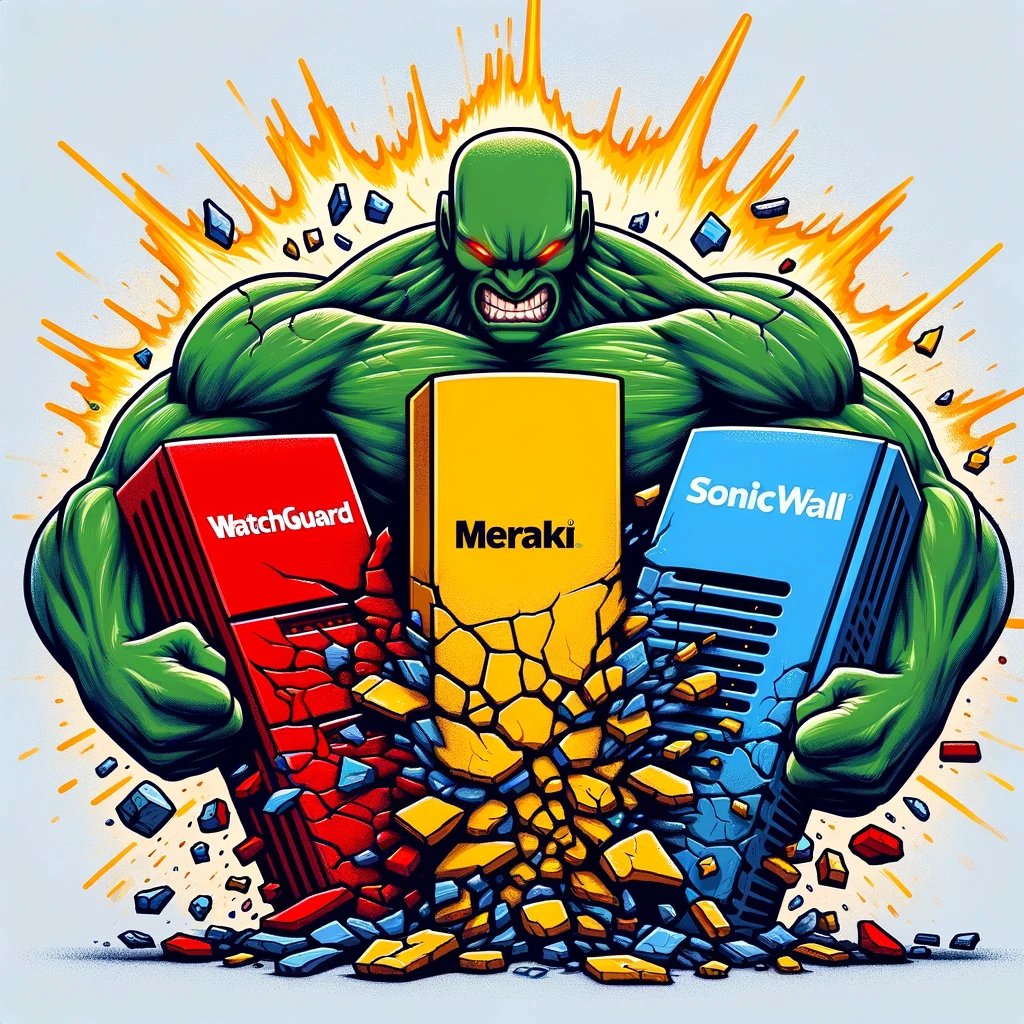
In the world of network security, firewalls serve as the first line of defense against cyber threats. This comprehensive analysis will delve into the specifics of three major firewall providers – Meraki (by Cisco), WatchGuard, and SonicWall – comparing their features, performance, and usability to determine why Meraki might be the superior choice for most scenarios.
Introduction to the Contenders
Meraki – A Cisco product, Meraki is known for its cloud-managed IT solutions, offering a range of products including firewalls. Meraki’s firewalls are celebrated for their ease of use, cloud-based management, and comprehensive security features.
WatchGuard – WatchGuard provides advanced security features and is known for its robustness and reliability. It’s a popular choice for organizations looking for detailed control and customization.
SonicWall – SonicWall offers a range of firewall solutions known for their high performance and deep packet inspection technology. They are often lauded for their efficacy in threat protection and network management.
Feature Comparison
- Management and Usability: Meraki’s dashboard is renowned for its user-friendly interface, offering easy setup and management. WatchGuard also offers a user-friendly experience but with more detailed customization options, which can be more complex. SonicWall provides comprehensive features but is often perceived as less intuitive than Meraki and WatchGuard.
- Security Features: All three offer robust security features, including threat prevention, VPN support, and advanced malware protection. However, Meraki stands out for its seamless integration with other Cisco security products, offering a more unified security ecosystem.
- Performance: SonicWall is often praised for its high-speed performance and deep packet inspection, while WatchGuard offers customizable performance features. Meraki, though not always matching SonicWall in raw performance metrics, offers sufficient performance for most business needs, combined with superior ease of use.
- Cloud-Based Management: This is where Meraki truly shines. Its cloud-based management system allows for remote configuration, monitoring, and troubleshooting, which is a significant advantage over the more traditional management systems of WatchGuard and SonicWall.
Detailed Analysis of Each Product
Meraki’s Strengths:
- Simplicity and Efficiency: Meraki’s firewalls are designed for simplicity, making them ideal for businesses without extensive IT resources. The cloud-based management platform is intuitive, reducing the time and effort required for setup and maintenance.
- Scalability: Meraki’s solutions are highly scalable, perfect for growing businesses. Their cloud-managed nature allows for easy expansion without significant hardware changes.
- Integrated Solutions: As part of Cisco, Meraki benefits from integration with a wide range of top-notch networking and security products.
WatchGuard’s Advantages:
- Customization: WatchGuard firewalls offer high levels of customization, making them suitable for businesses with specific security needs.
- Robust Security: Known for robust security features, WatchGuard provides comprehensive protection against a wide array of threats.
SonicWall’s Key Features:
- Performance: SonicWall’s firewalls are recognized for their high-speed performance and effective deep packet inspection.
- Advanced Threat Protection: They offer advanced threat protection capabilities, making them suitable for environments where security is a paramount concern.
Why Meraki Could Be Considered the Best Choice
- Ease of Deployment and Management: Meraki’s firewalls are incredibly easy to deploy and manage, thanks to their cloud-based management system. This ease of use makes them an ideal choice for businesses with limited IT resources or those looking to simplify their network management.
- Seamless Integration: The integration of Meraki firewalls with other Cisco products offers a streamlined and efficient security experience. This ecosystem approach provides a level of security and functionality that is hard to achieve with just standalone products.
- User-Friendly Interface: Meraki’s interface is designed for simplicity and clarity, making it accessible to users of all technical levels. This contrasts with the often more complex interfaces of SonicWall and WatchGuard.
- Reliability and Support: As a Cisco product, Meraki comes with the reliability and extensive support network that Cisco is known for. This support is crucial for businesses that rely on their network infrastructure for daily operations.
- Cloud-First Architecture: In an increasingly cloud-centric world, Meraki’s cloud-first architecture provides businesses with the flexibility and scalability they need to grow and adapt.
- Comprehensive Security: Despite its simplicity, Meraki does not compromise on security. It offers a range of advanced security features, including intrusion prevention, content filtering, and malware protection, ensuring comprehensive network security.
Conclusion: A Holistic Approach to Network Security
In conclusion, while WatchGuard and SonicWall offer robust firewall solutions with their unique strengths, Meraki stands out for its combination of ease of use, comprehensive security coverage, seamless integration with other Cisco products, and excellent cloud management capabilities. These qualities make Meraki an ideal choice for businesses seeking a balance of performance, security, and usability in their network infrastructure. The selection ultimately depends on specific business needs, but for a holistic, user-friendly, and efficient approach to network security, Meraki is often the best choice.





Leave a comment